Binance futures fees,
and how to pay the least
From base maker/taker rates to BNB, VIP, and referral-code discounts — cut every fee that leaks with each trade.
Base fees at a glance
USDT-M perpetual futures, Regular-user rates.
Why is a limit order cheaper than a market order?
For the exchange, order-book depth is an asset. A maker, who places a price in advance, supplies liquidity and is rewarded with a lower fee, while a taker, who fills instantly, consumes liquidity and pays more.
- Limit order = maker (posts to the book and waits)
- Market order = taker (fills instantly)
- Even a limit order is classed as a taker if it fills instantly
- Use the "Post Only" option to always be treated as a maker
Futures fees by VIP tier
Calculated automatically from your last-30-day trading volume (USDT) or BNB holdings.
| Tier | 30-day volume | BNB held | Maker | Taker |
|---|---|---|---|---|
| Regular | < 15M | < 25 | 0.0200% | 0.0500% |
| VIP 1 | ≥ 15M | ≥ 25 | 0.0160% | 0.0400% |
| VIP 2 | ≥ 50M | ≥ 100 | 0.0140% | 0.0350% |
| VIP 3 | ≥ 100M | ≥ 250 | 0.0120% | 0.0320% |
| VIP 4 | ≥ 600M | ≥ 500 | 0.0100% | 0.0300% |
| VIP 5 | ≥ 1B | ≥ 1000 | 0.0080% | 0.0270% |
| VIP 9 | ≥ 25B | ≥ 5500 | 0.0000% | 0.0170% |
USDT-M vs COIN-M fees — which is more favorable?
Even for the same Bitcoin futures, the fee rate and P&L calculation change depending on what the margin is.
| Category | USDT-M (USDⓈ-M) | COIN-M |
|---|---|---|
| Margin | USDT (stablecoin) | The coin itself (BTC, ETH, etc.) |
| Maker (Regular) | 0.0200% | 0.0200% |
| Taker (Regular) | 0.0500% | 0.0500% |
| VIP 9 maker | 0.0000% | −0.0050% |
| P&L volatility | Fixed in USDT terms | Extra exposure to the coin price |
| Best used for | General trading; taking profit in USDT | Hedging for long-term coin holders |
💡 If you're a beginner, start with USDT-M. P&L settles in USDT so it's intuitive, with one less layer of volatility exposure.
Discounts stack
Binance fee discounts apply multiplicatively as "base rate × (1 − discount)".
- BNB payment discount (−10%)
- Referral code discount (−20%, for life)
- Automatic VIP-tier discount
- Event maker rebates
Real-time fee calculator
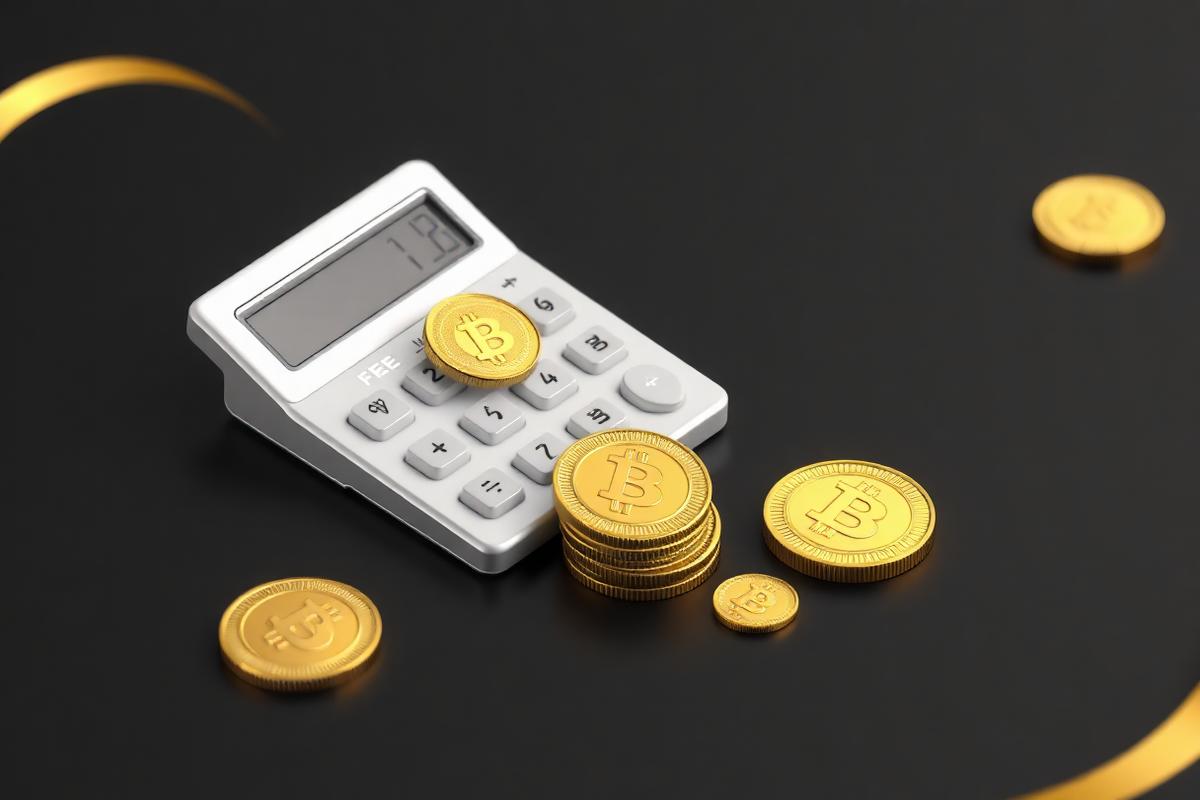
Enter your position size and options and your actual fee is calculated instantly.
One-year savings by monthly volume
On a taker basis, how much can you save in a year with the referral code (−20%) + BNB payment (−10%) applied together?
| Monthly volume | No discount (yr) | −10% (BNB) | −20% (referral) | −28% (stacked) | Savings |
|---|---|---|---|---|---|
| 1,000 USDT | 6 USDT | 5.4 | 4.8 | 4.32 | −1.68 |
| 10,000 USDT | 60 | 54 | 48 | 43.2 | −16.8 |
| 100,000 USDT | 600 | 540 | 480 | 432 | −168 |
| 500,000 USDT | 3,000 | 2,700 | 2,400 | 2,160 | −840 |
| 1,000,000 USDT | 6,000 | 5,400 | 4,800 | 4,320 | −1,680 |
* Taker 0.05%, assuming the monthly volume is the same all year · unit: USDT
Practical savings tips
- Use limit orders where possible to be a maker
- Always keep a little BNB balance → BNB is deducted automatically
- Enter referral code REF123456 at sign-up (required)
- Accumulate monthly volume to raise your VIP tier
- Use maker-rebate campaigns during events
The funding fee is scarier than the trading fee
Perpetual futures have one side pay a funding fee every 8 hours. It's usually around ±0.01% and negligible, but in a strong trend it can spike above 0.1% and drain over 10x the trading fee.
- More longs → positive funding → longs pay shorts
- Over a long hold, funding costs more than what you save on trading fees
- Closing just before settlement (00·08·16 UTC) avoids one cycle
- Always check "Next Funding" in the symbol info panel
Related visuals

Frequently asked questions about fees
What are the base Binance futures fees?
For USDT-M perpetual futures, the maker fee is 0.0200% and the taker fee is 0.0500%. Paying with BNB gives an extra 10% discount off those rates.
How much do I save with a referral code?
Entering referral code REF123456 gives you a lifetime discount on trading fees. Once entered, it's a permanent discount that doesn't disappear.
How do I raise my VIP tier?
It's calculated automatically from whichever is more favorable: your last-30-day trading volume (in USDT) or your BNB holdings. The tier is refreshed at a set time each day.
How does the BNB payment discount apply?
If you have a BNB balance in your futures wallet and the "Use BNB to Pay Fees" option is on, BNB is deducted automatically and a 10% discount applies.
Can I stack discounts?
Yes. The BNB discount, referral code, and VIP tier each stack multiplicatively. Example: 0.05% × 0.9 × 0.8 = 0.036% (BNB + referral applied together).
Can I get a maker rebate (negative fee) too?
Regular users generally can't; a negative fee applies only at very high VIP tiers (VIP 8–9) or through participation in an event market-maker program.
Are the fees the same as spot trading?
No. Spot fees are 0.1% base for both maker and taker, dropping to 0.075% when paying with BNB. Futures are generally cheaper.
Can I add a referral code to an already-registered account?
No. A referral code can only be entered during sign-up and can't be changed or added afterward. If you need to, consider re-registering with a sub-account.
What about withdrawal fees?
Withdrawal fees vary by coin and network. For USDT, TRC20 is about 1 USDT, BEP20 is about 0.3 USDT, and ERC20 varies with gas and is the most expensive.
Is the funding fee included in the trading fee?
No. The funding fee isn't taken by the exchange — it's exchanged between traders (long↔short) every 8 hours. You bear it separately from the trading fee.
Cut your fees for life with one setup
Just sign up with referral code REF123456.
Sign up for Binance →