01
Sign up & KYC
Register by email, then verify your ID. Enter referral code REF123456 for a lifetime fee discount.
From sign-up to leverage settings, order methods, and risk management — every step beginners find most confusing, all on one page.
Just follow along now and you can open your first position right away.
Register by email, then verify your ID. Enter referral code REF123456 for a lifetime fee discount.
Transfer USDT to Binance from an exchange or wallet. TRC20 or BEP20 network recommended.
Move funds to the USDT-M futures wallet in the wallet menu.
3–5x recommended for beginners. Use isolated margin to keep your loss limit clear.
Limit/market orders — always set a stop-loss and take-profit at the same time.
Even buying the same Bitcoin, spot and futures are completely different games. Know these 6 differences before you start.
Spot: You own the coin directly and can withdraw to an external wallet
Futures: You only hold a contract on price movement
Spot: None (fixed at 1x)
Futures: Up to 125x
Spot: Profit only when rising (long only)
Futures: Profit on both rises and falls (long/short)
Spot: None (only asset value changes)
Futures: Forced liquidation when margin is insufficient
Spot: None
Futures: Perpetual futures incur it every 8 hours
Spot: Long-term holding, HODL strategy
Futures: Short-term trading, hedging, arbitrage
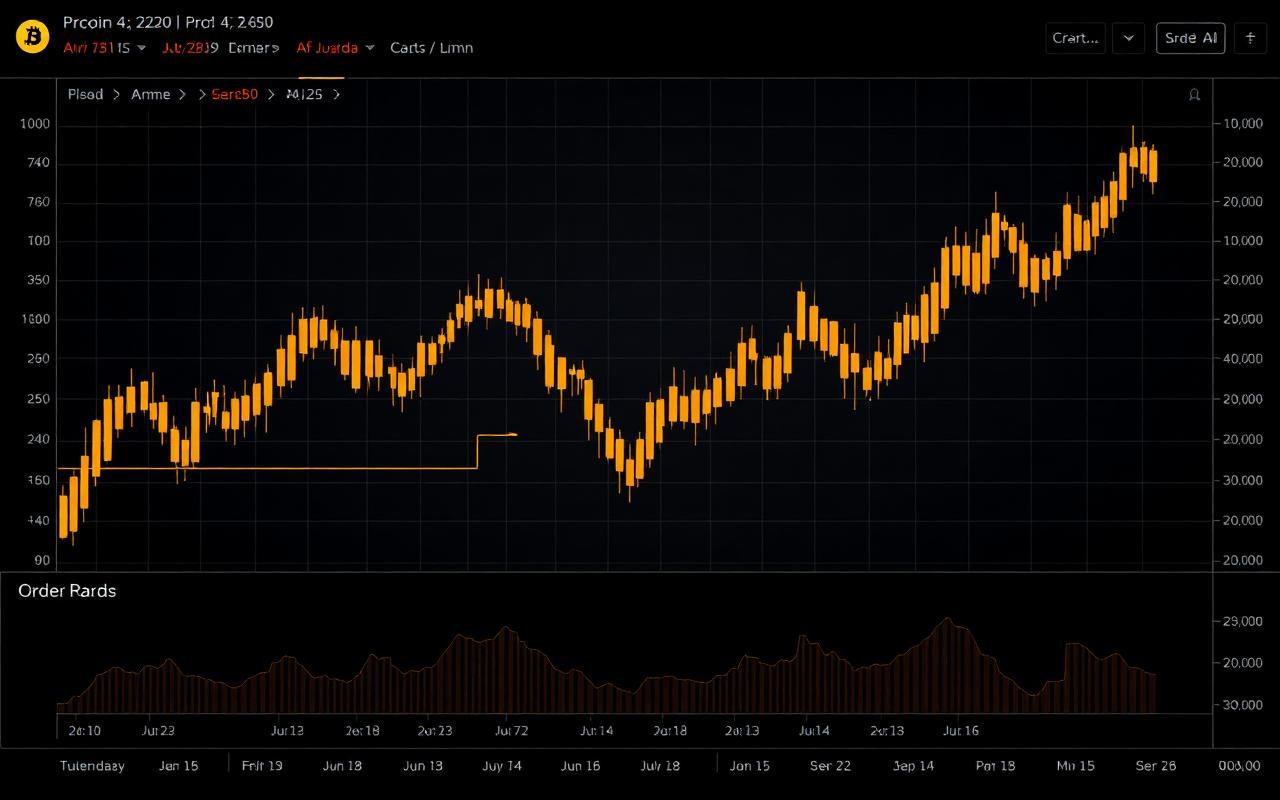
The Binance USDT-M futures chart is based on TradingView, so you can use key indicators like candles, moving averages, and RSI for free.
Binance offers up to 125x leverage, but the higher the leverage, the closer the liquidation price is to your entry.
Even at the same entry and same leverage, the liquidation price changes completely depending on the margin mode. It's safer to start with isolated, where you can set a clear loss limit.
Using only market orders leaks money to slippage. Pick the order type that fits the situation.
Fills instantly at the current quote. Fast, but with slippage and a taker fee.
Waits at your chosen price. A maker fee applies, reducing your cost.
Auto-closes at market when a set price is hit. The basis of automated stop-loss/take-profit.
Places a limit order after the trigger. Blocks slippage but risks not filling.
The stop line auto-adjusts as the price moves. Best for trend following.
Fills only as a maker. Auto-cancels if it would fill immediately.
To keep the perpetual futures price from straying too far from spot, one side pays the other every 8 hours. It's usually around ±0.01%, but with high volatility it can spike to ±0.1% or more.
The higher the leverage, the closer the liquidation price is to your entry. At 100x, just a 1% move against you zeroes out your margin. What really protects your capital isn't leverage — it's stop-loss discipline.
Low slippage and fast fills even for large amounts.
A user-protection fund for incidents like hacks.
The same experience on mobile, web, and API.
An extra discount when you use referral code REF123456.
Korean interface and customer support channels available.
Trade both USDT-M and COIN-M perpetual and quarterly futures.
90% of first losses start from the same mistakes. Know them in advance and avoid them.
50x/100x leverage gets liquidated by one small wobble. Master it at 5x first, then step up gradually.
"It'll recover if I just wait a bit more" is the most expensive thought. A stop-loss is a must the moment you enter.
The moment you bet your whole balance on one position, the game is over. Enter in portions of 5–10% of capital.
Reckless add-ons to recover losses only accelerate them. The angrier you get, the more you should close the exchange.
Most paid signals are cherry-picked after the fact. Following them without your own analysis is the most expensive tuition.

Binance is an overseas exchange, and individual trading is possible at your own responsibility. Taxation of crypto income changes policy every year, so be sure to keep your trade records separately and check the latest tax law.
For USDT-M futures, you can open a position with just about 5–10 USDT of margin. However, with too little capital, your stop-loss room is tight and you get liquidated often, so we recommend starting with 100 USDT or more.
It's not required, but entering code REF123456 gives you a lifetime discount on trading fees. It can't be changed after sign-up, so be sure to enter it during sign-up.
It's when your position is forcibly closed because your margin falls below the maintenance margin. With isolated margin you lose only that position's margin, but with cross margin your entire futures wallet balance is at risk.
A long is a buy position that profits when the price rises; a short is a sell position that profits when it falls. The biggest advantage of futures is that you can profit even in a falling market with a short position.
We recommend 3–5x for beginners, and even intermediate traders shouldn't exceed 10–20x. Every 1x you add narrows the price room to liquidation by that much.
If the funding rate is positive (+), longs pay shorts; if negative (−), shorts pay longs. It settles every 8 hours and applies only if you hold a position at that moment.
For most beginners, USDT-M (USDT-margined) perpetual futures are easier to understand and the P&L calculation is intuitive. COIN-M uses the coin itself as margin and is useful for hedging a price decline in coins you hold.
Direct payment with Korean cards is limited. The most common route is to buy USDT on a domestic exchange (Upbit/Bithumb) and transfer the coins to Binance. TRC20 or BEP20 network is recommended.
For USDT it usually processes within 5–15 minutes. For a first withdrawal or a large amount, extra identity verification and email confirmation may be required, taking 1–24 hours.
Sign up through the official Binance referral and pay less from your very first trade.
Sign up for Binance →